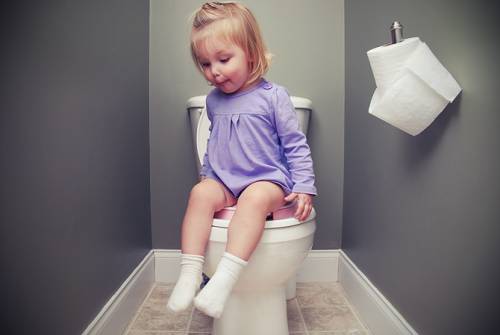
Potty training your toddler is a big challenge! A great way to get started is to make sure you have all the right equipment on hand. Check out my demo potty training video of all the items you need to begin potty training and make the whole thing a bit easier. And see all my favorite essentials below.
My essential items for potty training :
Potty chair (BABYBJORN Potty Chair): This one is on the pricier side, but I had the best luck with it. I now have a few and my younger kids sit on them during bath-time!
Toilet seat adapter (BABYBJORN Toilet Trainer) – I like the shape of this Bjorn adapter and my kids found it comfortable from age 3 to 8 years old.
Toilet step stool (BABYBJORN Safe Step) — you can use any wood stool, or get this sturdy waterproof one for your bathroom.
Pull-Ups (Pampers Easy Ups Trainers for Girls) — These are my 3-year-old girl’s favorite Dora pull-ups! My boys loved Diego and Cars!
Potty books: “Big Girls Use the Potty!“ and “Big Boys Use the Potty!” are my favorites.
Big kid underwear! I love these Gerber 4-pack in girl and boy patterns). I like the quality of the cotton and they last! You can find snazzier patters, but these will last — trust me.
What are you favorite items when it comes to potty training? Comment below and share your potty training stories and tips with other moms!
Around the age of 22-24 months, a toddler will exhibit signs of readiness. Conscious pause in play to poop, whining to be changed when wet or poopy are some of these signs. Also, having the verbal ability to communicate the act (a simple "pee-pee and poo-poo will suffice) is important. Make an effort to determine how long the toddler stays dry on any given day. This means checking every hour for wetness. When the toddler can "hold it" for at least an hour, preferably two, he or she is ready for the next phase.
Potty Training Toddler Steps 2 - Doo As I Doo
It may sound strange, but kids learn from example! About a week or two before starting the final phase, make a scene when you go potty. Don't worry, the child will not know you look foolish. Standing outside the bathroom door, grab the front of your pants and put an apprehensive look on your face, and say something along the lines of "oh, no! pee-pee!" and dash into the bathroom. I guarantee the toddler will follow out of sheer curiosity and to see what the heck your problem is. If you aren't comfortable doing the deed in front of the child, pretend. Perform that act once or twice a day. Within a week or two, you are ready to proceed.
Hint: If there are older, potty-trained children around, the toddler will almost likely want to know what on earth is going on in the bathroom, and often will pick up clues by watching them instead.
Pick up a potty chair with the child. A simple potty chair is best. No fancy gadgets with bells, lights and sound effects. No toilet paper holder. No book rack. Just. A. Potty. Chair.
Potty Training Toddler Steps 3 - Seven Step Program, Part One
As in, seven days. Pick one week where you can give the child your completely undivided attention! In the days before the week commences, take the child shopping, and pick out "big boy" or "big girl" underwear. These should be the 100% cloth training pants that are basically underwear, with an extra thick padding in the middle. Not pull-ups, not plastic-lining-on-the-outside underwear. If the kid feels like he or she is wearing a diaper, guess what? They will treat it like a diaper.
At bedtime the night before the week-long training begins, remind the child that tomorrow he or she will be a big kid and will wear undies! YAY!
Potty training toddler steps 4 - The Hard Part
When the child wakes in the morning, make a big deal about how they are such a big kid! Remove the diaper, clean as usual, and then put the new training pants on the child. And that is all the child should have from the waist down! This gives the kids a chance to feel when they have wet or pooped. (I have done this method in EVERY season, they never freeze to death, I promise)
Throughout the day, offer the child dry snacks (to increase thirst just a little) and follow up with plenty of drinks, milk, juices, water, whatever the child will drink. This helps the child actually feel the bladder fill, and eventually correlate the act of drinking and peeing. Every hour, take the child to the potty chair, help them pull the underwear down, and help them sit. Encourage them to pee, using extremely simple language. "Time for pee-pee"! etc, using facial expressions of effort (yes, the grunt face). Wait a few minutes. It won't happen immediately, and most likely, it won't happen at all in the potty the first two days. After about five minutes, consider it a good effort no matter what happens. Offer praise (good try!).
The first two days, the child will wet themselves every single time. It's just how it is.
You aren't doing anything wrong. It has to "click" for the kid. You will be very frustrated, but persevere. Backtracking to diapers during the day is confusing. When an accident happens, feel free to look disappointed. Phrases I have used: "aw man! an accident!" and even "ew, stinky poo!" It's not making a child "feel ashamed of bodily functions". It's making the child aware that big people don't walk around pooping and peeing on ourselves and sitting in it.
At nap time, place a folded old towel under the child, or have some other absorbent but unobtrusive padding under the lower half of the toddler.As soon as he or she wakes, excitedly take them to the potty if they are dry. If they are wet, it's ok to be disappointed and say "aw, you had an accident!" in a sad voice. They can "help" clean up, and when all is right again, say "good job!" and give great big hugs.
At night, continue the bedtime routine, but insert a potty chair trip just before the last bedtime diaper is put on.
Potty training steps 5 - Figuring It Out
The third and fourth days, continue the same steps as the first days, offering snacks, and fluids, but you will notice that the child will pee about 50% of the time in the potty and most likely will have a poop on the potty. Continue to watch clues! When you see the child grunting or pausing in play, especially if he or she is fairly regular like most kids are, say "poo-poo?!?!" and hold their hand, and dash to the potty. Even if they don't make it, they form the opinion that this poo-making business is serious, and therefore must be paid attention to. When they have a poo-accident, make sure they watch you dump the poop into the toilet, have them wave bye-bye to it, and holding their hand for reassurance, flush it. Some kids get nervous with the flush. But most kids have seen/heard it plenty by now, just from following you into the bathroom oh so many times.
Potty training toddler steps 6 - Fine Tuning
The fifth, sixth and seventh days are the fine tuning days. The child now gets the concept, and is working to perfect this new skill. You can now return to the regularly scheduled snacks and drinks. Do continue to ask the child every hour if the potty is needed, just as a reminder, especially when the child is concentrating hard at building a tower or some other fun task.
On the seventh day, take the brave step of a trip outside the house. Pack a change of bottoms. Pee before you leave, if possible. Ask every hour if the potty is needed. And don't take more than an hour and a half before going back home. This is almost like a test. The child sees that "Wow! People leave the house like this?!"
As for giving up the night-time diaper, wait until the child goes for at least 2 weeks without a single night-time accident before you let them sleep in their undies.
Don't forget to do the happy dance when there is success in the potty, no matter how minute. The child will make a grand effort just to see you do that again.
Good luck, and happy trails
The first approach in child toilet training will give you a lesson that you can take advantage. potty training girls and boys have different success ratios increase. but on the success of your first child readiness in recognizing the toilet and throw diapers that is one best ways.
Since this post is about potty training, I am forced to use the words poop and pee to differentiate between the kinds of body waste. So consider yourself warned before you continue reading this post.
My youngest turned two last month. She has been completely diaper free (nights, naps and travel included) for over six months. She was completely potty trained by the time she was a year old. It often surprises people when I say this , or when they watched my one and a half year old drop her pants and run towards the potty when she had to go.
Everyone is curious to learn about how I trained my kids, so here it is my approach to potty training, some simple beliefs, and how I think you can potty train your young child too.
My approach to potty training girls or boys
Just like with anything else I do in my life, I set out with a goal and I work towards it. I practice consistency and persistence. I forgive myself when I fail. And I will give up if I think something is taking over my life in ways I never imagined.
That was my approach with potty training both of my children. I started training them between nine and twelve weeks of age. I took breaks several times, but I never gave up because I worked on it in stages. But it worked both my kids went to the potty first thing every morning, and I have rarely changed a poopy diaper beyond 12 to 15 weeks of age.
My beliefs, and some facts to consider
1. If infants can signal hunger, they can understand and signal wanting to go potty.
Kids cry when they are hungry. We watch for the signals of hunger and train them to ask for food as they grow up. I strongly believe it is the same with potty training. When the child is too young to go to the bathroom by himself or herself, we have to watch for the signals and take them to the bathroom. And in this process, patience is an important virtue.
2. Bodies have a rhythm.
We eat at regular intervals and we go to the bathroom at regular intervals. Bodies have and like rhythms. It’s important to watch and maintain these rhythms for little kids as well.
If you help cultivate these rhythms when they are little, they grow up into adults with healthier digestive system and habits.
3. Everything does not work for everybody.
It is important to take baby steps and improvise. As with everything, find what works for you and your family. Raising kids in not an easy job. If you start early, you will succeed, so long as you give yourself time to fail and learn. So start sooner than later and find what works for you.
4. Set the right expectations.
In my case, my kids rarely soiled their diapers beyond four months of age. They were both walking by the time they were ten months old and started to make trips to the bathroom by themselves. By 15 to 18 months, they were both completely potty trained.
But, as in every situation, there were exceptions and accidents. If you want all these things to happen, you should be okay with rushing your child to the potty when you see that little pressure cringe on his or her face, even if you are at a friend’s place. We still take the kids to the bathroom to empty off their bladder at 11 p.m. every night.
If your life or personality does not allow for these things, you have to give yourself more months to potty train your little ones.
No toilet training equipment for children that are specifically required, but may be some equipment that can help your child understand the toilet easier. potty training girls would be easier than potty training boys. potty training a girl does not need a substantial cost, but you really have to invest in order to achieve success.
You don't really need anything special for toilet training, but you may want to invest in some specialty items such as a toddler-sized potty seat, books, rewards and motivational items, or potty-training friendly clothes. This brief guide offers some recommendations for gear that can make the transition from diapers to big kid pants easier. Potty Train in Three Days Tips And Techniques
Potty Seat. There are a wide variety of options to meet your child's comfort and needs as well as your budget, including stand-alone chairs and toilet seat covers. If you do opt for a toilet seat cover, consider buying a stool as well so your toddler can sit comfortable without her feet dangling; it usually allows toddler to feel more comfortable which will help them be more successfull.
Disposable or cloth underpants. Choosing which type of underwear you want to train with is a personal decision, and you may want to experiment with one way before switching to something that works better for your child.
Clothes for Potty Training. Choosing easy-to-remove clothes helps with the toilet training process in two ways: it makes it easier for you to get your child on the potty quickly, and it allows you to give your child a chance to undress herself and then redress, which helps to build independence and confidence.
Potty Training Books.Potty training books help to teach toddlers the basic how, when, and why of using the potty, but they can also be a comfort while your child sits on the toilet. Having special books that he can read while he's using the potty can entice him to sit longer and try to finish. you can learn tips and methods about this Here
.
Potty Training DVDs. These short animated shows (usually starring a beloved character) are most helpful and motivating when you watch them with your toddler so you can explain what’s going on and refer back to the scenes later on when you're together in the bathroom.
Flushable Wipes. A nice to have, but definitely not a necessity, flushable wipes can be an expense you don't need, but they can also help you manage the mess that accompanies potty training and make a child more comfortable during the transition out of diapers. They are sometimes especially helpful when your child is reluctant to use the toilet for a bowel movement.
Many of us decide whether we want a little girl or a little boy very early on. Maybe you want to have a baby boy so that he’ll someday grow into your strong, caring son, or maybe you want a little girl so that you can fill her closets with adorable dresses and bright clothes. We all know that we’ll love our baby no matter what, but having a gender preference is natural. In fact, many people also agree that girls are much easier to potty train than boys, which is another reason they might be preferred by the nervous, first-time parent. Believe it or not, there is actually no research that supports this claim.
Studies show that the ability for a child to learn how to use the toilet has nothing to do with his or her gender. Instead, the ability is based on their general level of incontinence and ability to learn overall. People probably assume girls are easier to teach because they don’t have to add the step of standing up to the process, so the training is over sooner.
It’s also important to note that the signs that a girl is ready to learn how to use the potty are the same as those for a boy. You should only start potty training your toddler when he or she is able to “hold it” for a few hours at a time. This ability shows that there is some control. Additionally, your child should be able to understand and follow instructions and have the mobility to get off and on the toilet independently. When all of these things align, it’s time to teach your child the proper way to use the bathroom depending on his or her gender, and the process for boys and girls is actually very similar.
If you think it might be time to potty train your child, get ready for a difficult but rewarding process. Some children learn faster than others, so don’t give in to the pressure to be discouraged by the parents of your child’s peers. Even if it seems like your boy or girl will never learn, there will eventually be a breakthrough day when you feel confident that potty independence is just around the corner. Once your child can use the restroom independently, you’ll be forced with one of many signs to come that your baby is growing up. To really get the right start potty training you can try several accurate techniques based expert toilet training children for 3 days or less, the toilet training really guarantee success in practice and material. you really will find smart ideas in dealing with your child in potty training for 3 days or less. Do not ever be afraid to start, this is one quick way that you can take to resolve your child's toilet training solution. This quick and easy for 3 days or less.
How to potty training a girl and how to potty training a boy. be one thing to make your mother like headache and stress. but reading the potty training tips will give you the help you solve the problem. read on potty training girls and potty training boys.
It may seem impossible right now, but your toddler will eventually do her business in the toilet instead of in her diaper. Sure, it takes some toddlers longer than others to master the potty, but they all eventually do really. The key (as with many toddler trials) is patience; it’s also wise to wait until your child is truly ready to get started and to take potty training setbacks in stride. Remember, if you keep potty learning low-key, it will go more smoothly for everyone involved.
Whether you’re training a boy or a girl, these tips apply :
Get equipped : You’ve got two choices: a separate, low-to-the-ground potty chair or an insert that fits on the big toilet seat to make it small enough for little bottoms (if you go this route, you’ll also need a step stool). If possible, check out both options together and see what your toddler prefers (buying both won’t break the bank, either). Also stock up on liquid soap (for washing little hands), cleansing wipes (the flushable kind for behinds, and the kind for floors and fixtures) small rewards (such as stickers or dollar-store trinkets), and pull-on, disposable training pants or thick, absorbent cloth undies.
Get naked : Not you — your toddler. If possible, allow your toddler to spend some time diaper-free, either in your backyard, or inside (in a space with easily cleaned floors!). When she must be dressed, keep her in easy on/off pants or skirts with elastic waistbands (there’s no time to fuss with buttons or zippers when she’s really gotta go!).
Get reading : Buy or borrow books and dvds about potty training to share with your toddler. Most are available in both boy and girl versions. What to Expect When You Go to the Potty is a good choice.
Potty Training Boys
Boys tend to have a tougher time with the toilet. For one thing, it’s probably Mommy, not Daddy, who’s doing most of the coaching, so there’s little opportunity to actually show him how it’s done. Plus, boys need to master both sitting and standing to do their business. These tips should help your son catch on, though a male role model is a definite plus.
Start with sitting : Have him sit down for both peeing and pooping at first. For now, it’s tough enough just getting to the potty in time without having to decide whether to sit or stand. Plus, since one bathroom visit might produce both, er, outputs, it’s easier if your son stays in one spot for the whole shebang. Once he’s really got the hang of things, he can stand “just like Daddy.”
Point in the right direction : Whether he’s standing or sitting, show your son how to aim (you might give your hubby a refresher course, too). He needs to point his penis down into the toilet to make sure the pee goes where it needs to go. If/when he stands to pee, you can do target practice by floating O-shaped cereal, bits of toilet paper, or drops of food coloring in the toilet bowl and challenging him to go for a bull’s-eye.
Teach ups and downs : Now’s the time to teach your son some basic potty etiquette. If he’s standing up to pee, show him how to raise the seat (all the way, so it won’t fall down on him midstream) and then lower it again when he’s finished. (Here’s another lesson that Daddy may need to brush up on!) And don’t forget to flush!
With their seated-only style, it’s a little easier to train toddler girls. You can follow the general tips above, and don’t forget to lavish on the praise and positive reinforcement. The only girl-specific advice you need: Teach your daughter to wipe front to back to avoid spreading bacteria. If this is too tricky for now, you can have her pat dry instead.
But you have the best choice of toilet training, you can try a quick method of toilet training for 3 days or less by a special expert; toilet training children Lois Kleint. This guaranteed and proven to work effectively for three days or less. Potty Train in Three Days
If you have both a girl and boy child, you might have already realized that potty training can differ a little between the two. If you are training your daughter right now, consider yourself lucky. Girls tend to pick up potty training habits quicker than boys. However, what doesn't change between the two is the amount of patience and positive attitude you'll have to exert.
Remember this about How to Potty Train a Girl
Just because girls tend to potty train faster than boys, doesn't mean you should start them earlier. If you start potty training any child before they're ready the process will just be longer and more drawn-out. Once you have determined that your daughter is ready to tackle potty training, use the tips below to start her off:
Watch and learn. Toddlers learn by intimation, therefore if your daughter has seen their brother or father use the restroom standing up, they're likely to try. Explain to her how "mommies" and daughters have to sit down to use the toilet. Our expert potty training video can give you great parenting tips on the process. Lois Kleint's famous toilet training experts can help you understand your child's attitude. he learned the method is that it can help you more quickly in 3 days or less. Potty Train in Three Days
.
Personalize it. To make sure your daughter is comfortable, personalize her space. Bring in her favorite books and stuffed animals to the bathroom. You can also personalize her potty chair by decorating it with stickers or writing her name on it. Use her favorite stuffed animals to show her how to use the toilet. Using a printable potty chart is also a great way to make it a fun process.
Potty placement. Place your daughter's potty in an accessible area, which is close to where she plays and spends most of her time. You can watch for signs that she has to use the bathroom, like holding her private parts, jumping up and down and swaying side to side. When you notice these signs encourage her to go into the bathroom with you.
Correct methods. You'll need to teach your daughter the correct methods for wiping herself, which is front to back. If she wipes otherwise you need to explain to her why that's incorrect and how it could cause infections. If this proves too complicated, teach her to gently "pat" the area with toilet paper after urinating.
Reward system. You can encourage your child to stay on the right potty training track by providing her with occasional rewards. Every time she has a successful potty day let her place stickers on the potty chart. You can also go on a shopping trip for her favorite princess "big kid" underwear.
Support Her Potty Training Efforts
Even if she experiences setbacks or doesn't seem to be getting the hang of things, continue to support her. Start dressing her in loose clothes so she can get them off easier when she has to go to the bathroom or make a log of her usual bathroom breaks. Keeping yourself aware of when she has to use the toilet will help her to remember. Just don't overdo it, pushing her too hard will only result in more diaper days.
Potty Training Chair description : With realistic details and encouraging sounds, the Fisher-Price Cheer for Me! Potty helps you potty train your child in a fun, stress-free way. A bath tissue holder and flush handle look like miniature versions of the real thing, while cheerful phrases and engaging songs help make it fun and rewarding each time.
For added convenience, the removable bowl's smooth surface wipes down easily for mess-free cleanup. The potty ring can eventually be used on an adult toilet, providing a smooth transition.
Realistic Details and Fun Sounds Make Toilet Training Easy
Your child will appreciate the realistic shape of the toilet, the flush handle that clicks when pressed, and the retractable bath tissue holder. The potty rewards each success with five encouraging phrases and two sing-along training songs. Featuring a bright, smiling face, the Cheer For Me! Potty creates a fun, stress-free environment for your child to potty train.
Smooth, Nook-Free Bowl Surface for Easy Cleanup
This potty features a real-working
bath tissue holder and a flush handle
that clicks when pressed. View larger image.
For easy, mess-free cleanup, the potty seat's bowl is removable. Its surface is smooth without any nooks to reduce chance of buildup. The potty includes a lid-down feature and a splash guard shield for splash protection for boys.
Use on Adult Toilet to Aid Transition
When it's time to graduate to an adult toilet, the potty ring can be placed directly on a regular, unpadded adult-sized toilet. Your toddler will feel more secure on the real thing with the aid of the potty seat.
The Fisher-Price Cheer For Me! Potty operates with three AA batteries (not included).
About Fisher-Price: A Household Name for Quality Baby Products
Founded in 1930, Fisher-Price creates products that makes lives easier for parents and toys that foster a child's imagination. Instantly recognizable throughout the world as a leader in infant and preschool products,
Fisher-Price focuses on delivering stimulating products for both children and babies. With a trove full of classic, tried-and-true products in their arsenal, the company continues to design and create new developmental toys and baby products.
What's in the Box
Fisher-Price Cheer For Me! Potty and instruction manual.
The removable seat ring with lid can be moved from the potty to an adult-sized toilet when your child is ready. Click here to Large Image
This toilet training chair advantage over the other
There’s a fun clicking sound when you push down the handle. There’s even a toilet paper holder. With songs to learn and encouraging phrases and sounds to discover, the Cheer for Me! Potty really does make potty training fun! Because it looks similar to a real toilet, it encourages kids to make the transition to the grown up “potty”.
Songs and sound effects reward success and provide motivation for return trips. Realistic elements of potty encourage transition to grown-up toilet. Bowl removes for easy cleanup. Can be used on a regular toilet seat to help with transition. Requires 3 AA batteries. Buy This Fisher-Price Cheer for Me Potty
" Potty training is a major milestone. Get the facts on timing, technique and handling the inevitable accidents"
Potty training is a big step for kids and parents alike. The secret to success? Patience — perhaps more patience than you ever imagined.
Is it time?
Potty-training success hinges on physical and emotional readiness, not a specific age. Many kids show interest in potty training by age 2, but others might not be ready until age 2 1/2 or even older — and there's no rush. If you start potty training too early, it might take longer to train your child.
Is your child ready? Ask yourself these questions :
Does your child seem interested in the potty chair or toilet, or in wearing underwear?
Can your child understand and follow basic directions?
Does your child tell you through words, facial expressions or posture when he or she needs to go?
Does your child stay dry for periods of two hours or longer during the day?
Does your child complain about wet or dirty diapers?
Can your child pull down his or her pants and pull them up again?
Can your child sit on and rise from a potty chair?
If you answered mostly yes, your child might be ready for potty training. If you answered mostly no, you might want to wait awhile — especially if your child has recently faced or is about to face a major change, such as a move or the arrival of a new sibling. A toddler who opposes potty training today might be open to the idea in a few months.
There's no need to postpone potty training if your child has a chronic medical condition but is able to use the toilet normally. Be aware that the process might take longer, however.
Ready, set, go!
When you decide it's time to begin potty training, set your child up for success. Start by maintaining a sense of humor and a positive attitude — and recruiting all of your child's caregivers to do the same. Then follow these practical steps.
Pull out the equipment
Place a potty chair in the bathroom. You might want to try a model with a removable top that can be placed directly on the toilet when your child is ready. Encourage your child to sit on the potty chair — with or without a diaper. Make sure your child's feet rest firmly on the floor or a stool. Help your child understand how to talk about the bathroom using simple, correct terms. You might dump the contents of a dirty diaper into the potty chair to show its purpose, or let your child see family members using the toilet.
Schedule potty breaks
If your child is interested, have him or her sit on the potty chair or toilet without a diaper for a few minutes several times a day. For boys, it's often best to master urination sitting down, and then move to standing up after bowel training is complete. Read a potty-training book or give your child a special toy to use while sitting on the potty chair or toilet. Stay with your child when he or she is in the bathroom. Even if your child simply sits there, offer praise for trying — and remind your child that he or she can try again later.
Get there — fast!
When you notice signs that your child might need to use the toilet — such as squirming, squatting or holding the genital area — respond quickly. Help your child become familiar with these signals, stop what he or she is doing and head to the toilet. Praise your child for telling you when he or she has to go. Teach girls to wipe carefully from front to back to prevent bringing germs from the rectum to the vagina or bladder. When it's time to flush, let your child do the honors. Make sure your child washes his or her hands after using the toilet.
Consider incentives
Some kids respond to stickers or stars on a chart. For others, trips to the park or extra bedtime stories are effective. Experiment to find what works best for your child. Reinforce your child's effort with verbal praise, such as, "How exciting! You're learning to use the toilet just like big kids do!" Be positive even if a trip to the toilet isn't successful.
Ditch the diapers
After several weeks of successful potty breaks, your child might be ready to trade diapers for training pants or regular underwear. Celebrate this transition. Go on a special outing. Let your child select "big kid" underwear. Call close friends or loved ones and let your child spread the news. Once your child is wearing training pants or regular underwear, avoid overalls, belts, leotards or other items that could hinder quick undressing.
Sleep soundly
Most children master daytime bladder control first, often within about two to three months of consistent toilet training. Nap and nighttime training might take months — or years — longer. In the meantime, use disposable training pants or plastic mattress covers when your child sleeps.
Know when to call it quits
If your child resists using the potty chair or toilet or isn't getting the hang of it within a few weeks, take a break. Chances are he or she isn't ready yet. Try again in a few months.
Accidents will happen
You might breathe easier once your child figures out how to use the toilet, but expect occasional accidents and near misses. Here's help preventing — and handling — wet pants:
Offer reminders. Accidents often happen when kids are absorbed in activities that — for the moment — are more interesting than using the toilet. To fight this phenomenon, suggest regular bathroom trips, such as first thing in the morning, after each meal and snack, and before getting in the car or going to bed. Point out telltale signs of holding it, such as holding the genital area.
Stay calm. Kids don't have accidents to irritate their parents. If your child has an accident, don't add to the embarrassment by scolding or disciplining your child. You might say, "You forgot this time. Next time you'll get to the bathroom sooner."
Be prepared. If your child has frequent accidents, absorbent underwear might be best. Keep a change of underwear and clothing handy, especially at school or in child care.
When to seek help
Occasional accidents are harmless, but they can lead to teasing, embarrassment and alienation from peers. If your potty-trained child reverts or loses ground — especially at age 4 or older — or you're concerned about your child's accidents, contact his or her doctor. Sometimes wetting problems indicate an underlying physical condition, such as a urinary tract infection or an overactive bladder. Prompt treatment can help your child become accident-free.
Try The Potty Training For Girls In 3 Days Program
Try the program guide of experts is highly recommended. many programs are available in your city, but you also have to look at the quality of the program.
Potty training girls for 3 days you could be a small investment for your child's potty training success. Most importantly this program you can learn fast for 3 days or less. Check it here to find out the Potty Train in Three Days
When it comes to potty training girls, they can be just as hard to potty train as boys. There are advantages to potty train girls: you do not have to teach them to pee standing up and most toddlers are potty trained by women (whom they model their behavior after already).
Things to keep in mind when starting:
NO more diapers
Make sure she is ready
Be consistent
Stay positive - accidents happen!
Be ready with praise and rewards
Other than that, potty training a girl will be different for every parent, since every child is different and how they respond to the entire process will be different too. So, you want to be prepared from the beginning with everything that is needed to potty train, as well as begin talking with your daughter before the actual start day of potty training, this could be though of as pre-potty training, since you do not want to just one day start without giving your daughter any forewarning about what will be happening.
She needs to know that the diapers will be gone and that she will be wearing training pants from now on, even at night. You may want to get potty training DVD's, CDs and books for girls to go over what potty training is all about and what will happen.
This will help her be more at ease with potty training and will hopefully get her excited about going potty on the toilet. The potty training doll she can practice with before the big day of starting the potty training. She can practice with the doll, as well as have it with her when she begins potty training. You also want to make sure to pick out a potty chair or potty seat just for girls! She will need these to go potty on the toilet, especially if she is smaller, she may have a hard time getting on the full size toilet. Safer and more secure she feels, the easier potty training will be for her and you too.
Once you have gone over these things with her and spent time talking about potty training, choose a start day. From that day forward she will be potty training and using training pants.
How long you talk about the potty training , before actually starting will vary from child to child, however a month give or take is about how long this process takes. This gives her enough time to become familiar with the bathroom, ask questions, watch the DVD's, read the books together, play with the doll and learn all about what potty training is.
On the first day of no diapers, she may be upset or frustrated, since she will have accidents, however this is good since she can feel when she is wet or soiled and this starts to let her know she needs to use the potty.
It also helps her to start to recognize how she feels before the accidents happen, so she can get to the bathroom to go. You will want to start taking her to the bathroom in the beginning until you can see what her potty schedule is. Once you know when she goes, this makes taking her at those times easier.
You will want to be consistent and take her to the bathroom regularly, so that one of those times she may actually go. At this point she can be given a reward or if you are using a potty chart and potty stickers, she can place her sticker on the chart.
This pattern of taking her and asking her if she needs to use the bathroom will continue and hopefully she will begin to catch on and go on her own or let you know when she has to until she no longer needs to let you know and she is going on her own.
Hi I margareth. cases of toilet training children is very stressful and makes me angry. My daughter is 3 years old and acting very naughty, pee on the couch, at the dinner table, in the living room, in the bedroom. This makes me really angry.
I came to google to solve my problem. I found the potty training program for 3 days faster than dr, Lois Kleint. The first I do not care!
but after week I am keen to follow the method suggested. I try step by step for 3 days or less I managed to beat my child behavior.
Thanks dr.Lois. whoever you follow him and assured method will be successful toilet training your child for 3 days or less. Potty Train in Three Days
Recommend Potty Seat
This is one of the potty training seat for baby girls that fits best with a pleasant musical tones your child. Learn More