Pages

Showing posts with label Potty Training Girls Tips. Show all posts

Advice Toilet Training at Night

Thursday, April 24, 2014

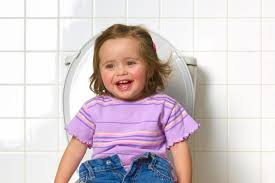
potty training girls age 2 years
When my first daughter showed signs of potty readiness at age two, I was more than ready to help her ditch the diapers. Before long, she was proudly sporting Elmo underwear and staying dry all day long. I was ecstatic. As a potty-training novice, I was certain that it would be a matter of weeks before she was dry at night, too.

Of course, the real scenario wasn’t nearly as neat and tidy. Although daytime training was quick and easy, nighttime dryness proved elusive. Months passed, and she pottied like a pro during the day but clung fiercely to diapers at night. After two long years (and many unsuccessful attempts) she finally started waking up dry, and we packed away the diapers for good.

In retrospect, it was no big deal: it’s highly common for a 4-year-old to wear a diaper to bed. Eventually, most kids achieve nighttime dryness without intervention. But I could have avoided some anxiety if I’d known all of that from the start.

Our situation was far from unusual; experts say that many parents need to adjust their expectations about nighttime dryness. According to Tai Lockspeiser, M.D., assistant professor of pediatrics, nighttime bladder control is a maturational process that can lag behind daytime bladder control by months or years. Twenty percent of kids still have nighttime accidents at 5 years of age, and doctors don’t define bedwetting until children are 6 years old.

So it’s completely normal, even expected, for kids to take their time with nighttime potty training. But the delay leaves many parents like me stuck in a waiting game, wondering when daytime potty learning will carry over into nighttime dryness. While parents can’t speed up the developmental process, they can help encourage dry nights with these simple steps.

Age Matters

Start with realistic expectations. While 88 percent of kids develop nighttime bladder control by age 6, the timeline varies widely. Boys typically train more slowly than girls, says Lockspeiser. Kids who are exceptionally deep sleepers and those with developmental delays may have more difficulty with wetting as well, she says.

Potty Practice

The best way to encourage nighttime dryness is to practice good daytime habits, notes Steve Hodges, M.D., a pediatric urologist. Children should use the toilet as soon as they feel the urge—holding can strain the bladder and worsen nighttime wetting, he says. And using the toilet before bedtime is a must.

Encourage Digestive Health

“Constipation is probably the most underappreciated cause of bedwetting,” says Hodges. “It plays a role in 30 percent of the cases I see.”

A full GI tract puts pressure on the bladder, making nighttime accidents more likely.

Cut Caffeine

Limit fluids two hours before bedtime, particularly caffeine-containing beverages. “Caffeine is a diuretic, so it promotes urination. Drinking it before bedtime will make it harder for kids to stay dry at night,” says Lockspeiser.

Ensure Nighttime Toilet Access

Ensure that kids have access to the toilet at night. Nightlights in hallways and bathrooms can help kids find their way easily. If the trek to the toilet is too far or involves stairs that tots can’t navigate on their own, parents can place one of the small portable toilets commonly used for potty-training in their room at night.

Skills vs. Pills

Doctors may recommend treatment options for persistent wetting that doesn’t resolve by age six. Bedwetting alarms, called enuresis alarms, help children learn to stay dry by waking them at the first sign of wetness. Medicines like desmopressin can help prevent accidents by slowing nighttime urine production.

While pharmaceutical treatment can be useful for special situations—sleepovers or vacations, for example—it doesn’t help to correct a bedwetting habit, says Robert W. Collins, Ph.D., a psychologist who specializes in childhood toileting problems. He prefers alarms over pills: “Medications don’t enhance learning to give kids the skills to stay dry.”

Health Matters

See a doctor if a child who has been potty-trained and dry at night for months begins wetting at night. A urinary tract infection is a common culprit for sudden wetting. “We also consider stressors or social challenges, like a move, a new school or divorce,” says Lockspeiser.

Staying Clean: Encopresis

What about kids who soil at night? Encopresis is the term for soiling in inappropriate places after age 4. While nighttime soiling in preschoolers and school-age children is much rarer than bedwetting, it’s also more emotionally distressing for the family and socially isolating for the child, says Collins. His website, www.soilingsolutions.com, is a resource for parents dealing with encopresis. First, take a look at their daytime bowel habits.

“Chances are, a child who is soiling at night is holding during the day,” says Collins.

Dietary changes, increased fluid intake, and changes to the child’s daily routine can help encourage regular elimination during the day.

If improved daytime habits don’t resolve the problem, families can progress to more advanced encopresis treatment, which may include supplements, suppositories, and behavioral therapy to treat severe constipation and holding habits. The good news: these treatments have a high success rate and kids benefit from increased confidence and self-esteem as the condition improves.

The Right Attitude

Parents’ attitudes are highly important as kids develop nighttime control.

“Treat it as a problem-solving exercise—a family science experiment,” says Collins. Above all, make sure that children know that nighttime wetting or soiling is not their fault. Maintain a relaxed, supportive attitude, and you’ll pave the way for a future filled with clean, dry nights. or you can get efiesien to buy potty training by noon this good methods you can practice fast. click here for see

10 Tips To Make Potty Training A Success

Wednesday, October 30, 2013

potty training tips
Reaching the decision to begin potty training is the easy part. The tougher one is tackling it successfully so the end result pleases both parent and child. To make the potty training process a smooth success, the experts of the PULL-UPS® Potty Training Partners (PTPs) offer their tried-and-true tips to parents.

1. Be Prepared To Begin

Be prepared to begin the process. Potty training takes time and energy. The spring/summer season is often prepared as the warmer weather means less clothes, more vacations and longer days making more time for tots to master potty training. Any season can work though, just be prepared to work with "more" vs. "less."

2. Tailor Your Approach To Find What Works

Tailor your approach for potty training success. Different products offer ways to help make the transition easier. Parents can find a Potty Training Personality Profile at www.pull-ups.com that can suggest a training pant that matches their child’s learning style. Look for products that have wetness liners or other ways to help kids learn.

3. Introduce The Potty Chair Early

Introduce the potty chair at the beginning of the process when your child is showing signs of readiness—stays dry for two hours, interested in the bathroom, etc. Demonstrate how it works and instill a sense of potty ownership in him or her by wrapping it as a present or decorating it with stickers.

4. Get Your Child Comfortable With The Idea of Potty Training

Get your child comfortable with the idea of potty training, and introduce the potty training supplies you'll be using before getting started. Practice putting on training pants, washing his or her hands at the bathroom sink and sitting on the potty chair before he or she starts using it.

5. Remain Positive and Patient

Always remain positive and patient – potty training takes time and setbacks will occur. But remember that children thrive on positive reinforcement. Praise and rewards can help tots feel more comfortable with new skills and keep them motivated during each potty training stage.

6. Be Consisent

Be consistent – once tots are out of diapers – they stay out of them. It’s proven that toddlers train faster if they don’t switch back and forth between diapers and training pants.

7. Use Interactive Approaches

To sustain a child’s interest, use interactive approaches, such as games, videos, songs, books, progress charts and role modeling.

8. Use Teamwork

Use teamwork – make sure everyone in the child's life, from grandparents to daycare providers to siblings, is on board with a consistent potty training philosophy, encouraging your little one throughout the process.

9. Pack Familiar Potty Training Supplies When On The Go

When traveling, pack familiar potty training supplies like a child-size adapter seat and even a favorite book so he or she is as comfortable as possible using the potty in an unfamiliar setting.

10. Use Motivational Rewards

Use motivational rewards for your child, such as listening to a fun, potty training song on the PULL-UPS® Potty Training Totline at 1-877-4BIG-KID or downloading a special crown or badge at www.pull-ups.com for a quick and easy reward that says “I am so proud of you!” Other ideas include stickers or stamps, a token present such as bubbles, or a surprise from a "grab bag" pre-filled with inexpensive kid items.

Related Articles :
Potty Training Step By Step
Simple Approach To Potty Training
Potty Training Girls Equipment Needed
Potty Training Girls Are Really Easier ?

Simple 5 Tips Potty Training Girls

Tuesday, September 17, 2013

potty training girls
Potty training girls to be one of the tricky things that make you stressed, some parents had to give up on the attitude of the girl child or a boy.

The possibility of successful toilet training children quickly in 3 days or less you can learn with toilet training experts carol cline. in his toilet training children for 3 days or less.

Potty training is always a messy job. Accidents happen, meltdowns occur, and it can be a frustrating and trying time for both parents and kids.

But there is a light at the end of tunnel, mamas, trust me.

I’ve searched relentlessly for tips and tricks on potty training when I was going through it with my son and these are the ones that not only worked for us, but that other parents from around the web have used and been successful with.

Bribery Works,,If It’s Done Right

Here’s the trick with bribery, mamas.

First, it has to be something that your kids like – not what you like. For instance, if your child’s favorite candy is m&ms, then that’s the bribe. You may prefer them to be bribed with carrot sticks, but those are boring to our little ones. So make the bribe something they can’t resist.

Second, the bribe candy has to be where they can see it, hear it, and know that, without a doubt, they’re going to receive it if they do their business in the potty.

Some moms have kept the candy in a clear jar that they keep right next to the potty, others have placed the candy in a piggy bank and let the kids shake it, some moms have even given out the bribe when their child did a good job realizing they had to go.

Because, remember, understanding the feeling of having to go is just as important as getting the action of going itself down pat.

And lastly, don’t be stingy with the bribe candy. Hand it out freely once your child has done the deed correctly. Once my son got his urges, actions, and hand washing all down I saw nothing wrong with giving him a full candy bar that he got to eat at various times throughout the day.

Rewards work wonders if they’re given at the right time.

Stretching The Truth Goes A Long Way

It’s not that we’re telling you to lie to your children, but taking the truth and stretching it as far as you can may just come in handy.

For example, think of an elaborate story to tell your children as to where their toilet happenings go.

It could be food for the fish, a magical land where it helps nourish the fairies, maybe it even travels all the way to Hogwarts to help Harry defeat Voldemort.

Whatever it is that your kids revel in (trucks, trains, Barbies, etc), use your imagination and theirs to help get their potty trips to that faraway land to save the day.

Consistency Is Key

When you’re first starting out with the potty training, sticking to time intervals is the way to go.

Pick a time frame, say, every twenty minutes, and stick your little one on the potty even they say they don’t have to go. At least tell them to try.

Once they understand that the potty is where their business goes, you can very gradually increase the time frame for when you place them on again.

Don’t Forget About Dad

Sometimes, dads can work their magic to get your little ones to do things that mom can’t.

Use this power of dad to your advantage — and this will be especially helpful if you’re training a boy since dad has what he has.

This was the case in my house during our potty training venture. I could tell and ask my son to use the bathroom until I wanted to pull my hair out, when his father told him to try and go, he went in effortlessly.

Maybe he wanted to be a big boy for dad, maybe he wanted to show off to dad that he could do it, or maybe he simply felt a tad more comfortable seeing how the boys did it rather than the girls.

Regardless of what the reason, and I didn’t care what it was so long as we moved along in this potty training thing, my son went much more easily on the potty when his father wanted him to do it.

The Naked Truth

Sometimes, you just have to strip the kids and let them be naked to feel how being soiled really feels.

I know many families who have had success potty training this way.

Of course, this works better if you can do most of the ‘training’ outside, but if you can’t then there’s always the option of covering your furniture in plastic for the weekend while the kids are getting the hang of having to go.

Feeling bowel movements actually trickle down your leg isn’t a pleasant experience for anyone, be it adult or child. And your kids will catch on to this rather quickly and actually prefer to do their business in the potty for obvious reasons.

I have read parents’ accounts of having finished training their kids in one weekend by letting them run around naked for the two days and I’ve heard from the other side of the spectrum where the naked thing just didn’t work in their house.

And that’s okay, what works for one won’t necessarily work for others.
  • Always remember that potty training takes time, regardless if you’re dealing with a boy or a girl. Our kids have to understand the need to go as well as the action of going.

  • It will all come in time and soon diapers will be a thing of the past for your family. Remember that we’ve all been through it and you’re not alone. The potty training will happen and your child will get the hang of it, just hang in there.

8 Strong Tips Potty Training Girls

Tuesday, September 10, 2013

how to potty train a girl
One minute your toddler is running around in diapers and the next it’s time to think about training them to go to the bathroom on a potty. For me, potty training was defiantly a “wow, they grow up so fast moment” where one minute I was nervous about my two year-old leaving the house in diapers to her at 2.5 trained and wearing underwear (with a change of clothes) on trips outside of our immediate neighborhood. There were accidents along the way, refusal to try and even some regression, but overall the experience was incredible as she transitioned to this big kid phase. Here is potty training girls tips what worked for us.

Note: Although these tips apply to my experience with my daughter, you can also use them for boys.
  • Encourage your child to talk about toilet training : I defiantly started this process way before my daughter was ready to physically go to the potty. I started by talking about the process and showing her. As a toddler, this didn’t always resonate, so sometimes watching was a way for her to get familiar with the process.

  • Resources potty training for your girls : Part of the talk involved reading potty training stories like Potty Book for Girls by Alyssa Satin Capucilli. Our whole family knew who little Hannah was and as my daughter got older she also started to get excited about her own present (potty) that Hannah also received. I also liked Potty by Lesile Patricelli that follows the hilarious inner dialogue of a baby through potty training and Everyone Poops, the classic story by Taro Gomi that cleverly celebrates the process of going to the bathroom. As part of the reading, we also talked about how she would (one day) use the potty and how exciting it would be. This meant days and days of this talk but getting her used to the concept of the bathroom was extremely helpful as seen through the eyes of a character in one of her favorite books.

  • The new throne : The next move was to get a potty. It doesn’t matter what brand you choose, but I opted for a pinkish, girly one that I knew would appeal to her. It spend a lot of time in our bathroom before anything happened but it was important for her to see it and know that one day she would be using it. I also let her “personalize” it and anytime she did pee or poop on it she would add a sticker.

  • Trial and Error : Now that you have the potty, it’s time to start using it. In the beginning, this basically involved me placing her on the potty and hoping for the best. As she got older, we practiced peeing in the potty by keeping her out of diapers and then placing her on the potty. This was a lot of trail and error (not to mention a mess), but eventually she connected that when she had to pee she should go to her pink, sticker-filled throne.

  • Cool Undies : Although my daughter was psyched about potty training she wasn’t always successful. During that time she was also princess obsessed (still is actually) I enticed her to go more with super cool princess undies. She loved them and actually got excited about the potty. We had some of our most successful ventures out thanks to her big girl underwear.

  • Rewards : This is going to me something different for every kid but what worked for me was to create a sticker wall where every time that she peed or pooped in the potty she would get a sticker. When the entire blank sheet of paper was filled up we promised her ‘something special.’ This really helped her to get excited about her bathroom accomplishments as a new sparkly sticker made it’s way on her poster board.

  • Watch and learn : A major part of her potty training success was because she was able to see other toddler do the same thing. In her school, her teacher enforced a potty time where they all went which carried over into the home. If your toddler isn’t in a school, having them watch (and even better with other toddlers) is a great way for them to connect the act of going to the bathroom and try it themselves.

  • See ya later diapers : When she was about 2.5 years old we said goodbye to diapers. It didn’t happen overnight but it was a gradual process as she was able to pee and poop in her potty. I also personally felt that if diapers were around she would always have the clutch and might regress. For some people this might mean pull-ups and then diapers for other it might be right to underwear. Bottom line: you have to do what is right for your family and that doesn’t always fit into what your friends are doing or what family members are telling you to do.
I personally recommend you learn more about your child's toilet training tips and methods based on a guaranteed success for 3 days or less. you can learn more about how these methods evolved with the video.

Potty Training Girls Helpfull Tips

Monday, August 19, 2013

potty training
Tired of the seemingly endless cycle of changing diapers? Think your child might be ready to move on to toilet training? It’s a big step for everyone involved—and it can take a while for some children. But be patient and celebrate each milestone along the way. Soon, you’ll be able to say good-bye to diapers—for good.

Although most children are toilet trained when they’re 3 or 4 years old, there is no exactly right time to begin toilet training; you should start when your child is ready.

When to start potty training ?

So how do I know when my child is ready?

We’re glad you asked. At Children’s Hospital Boston, we’ve got answers for you.

The following signs may indicate that your child is ready to begin toilet training.

Your child should be able to :
  • walk well in order to get to the potty chair
  • tell you when he needs to go to the potty
  • control the muscles used for going to the potty
Your child might be ready if he :
  • asks to have his diaper changed or tells you a bowel movement or urine is forthcoming
  • shows discomfort when the diaper is wet or dirty
  • enjoys copying what parents or older children do
  • follows you into the bathroom and see how the toilet is used
  • wants to do things (like going to the potty) to make parents happy or to get praise
  • has dry diapers for at least two hours during the day or is dry after naps or overnight
Keep in mind that the process of toilet training is different for different kids. Some children get it in a day or two; for others, it can take months. For the reasons why — and some helpful tips.

How Children’s Hospital Boston approaches toilet training?

Some kids do have more trouble than others with toilet training. If your child has a medical condition that’s making it harder for her to master toilet training, we can help.

We usually see children and their parents individually at first and most children quickly master using the toilet without anxiety. For those who continue to have trouble, we have developed Toilet School, an educational program for both parents and children to help them with difficult toilet training :
  • It’s a six-week program in which six kids — mostly 4-, 5- and 6-year-olds — come to class once a week for an hour to an hour and a half.
  • Parents attend a separate class where they learn behavioral techniques designed to help their children master toilet use.
  • By graduation time in the sixth week, about 60 percent of the kids have successfully had a bowel movement on the toilet. The ones who haven’t get follow-up visits until they’re successful.

If you want to decide quickly program toilet training children for 3 days or less and have a very fast likely to succeed, you can just come in and buy a guide book of expert special toilet training your child in the city.

Some parents have to figure out how fast your child for toilet training, toilet training children for 3 days will give you more insight into the program and follow every guide greatly accelerate the process of toilet training your child.

Potty Training Girls 14 Tips Before Start

Friday, July 19, 2013

potty training girls tips
1. Potty training Girls Or Boys is a partnership, with proper roles assigned to each person. You can lead a baby to the bathroom, but you can't make him go.

2. You have not failed Parenting 101 if your baby is the last on the block to be dry. As with eating and sleeping, you can't and shouldn't force a baby to be dry or clean, but you can set the conditions that help baby train himself.

3. The bottom line is helping your baby achieve a healthy toilet- training attitude. Approach toilet-training as an exciting interaction rather than a dreaded task; consider this event an initiation into your role as instructor. From baby's viewpoint, toileting is his initiation into "bigness"-a rite of passage from toddlerhood into preschoolerhood. (This explains why the desire to stay little makes some procrastinators resist.)

4. Potty training is a complex skill. Before you rush baby to the potty at the first squat, consider what's involved in learning toileting skills. First, baby has to be aware of the pressure sensations of his bowel and bladder. Then he must make the connection between these sensations and what's happening inside his body.

Next he learns to respond to these urges by running to the potty, where he must know how to remove his clothes, how to situate himself comfortably on this new kind of seat and how to hold his urges until all systems are go. With all these steps, it's no wonder many babies are still in diapers well into the third year.

5. The muscles surrounding the opening of the bladder and bowel (I call them doughnut muscles when explaining the elimination process to six-year- old bed wetters) need to be controlled to open and close at the proper time. Bowel training usually precedes bladder training, mainly because the doughnut muscles surrounding the bowel are not as impatient as those around the bladder.

When a baby senses the urge to defecate, he has more time to respond before soiling his diapers. A solid substance is easier to control than liquid. When the bladder is full, the urge to go is sudden, strong, and hard to control.

6. The usual sequence of gaining bowel and bladder control is :
  • nighttime bowel control.
  • daytime bowel control;
  • daytime bladder control,
  • nighttime bladder control.
7. Girls are rumored to be trained earlier than boys. This observation reflects more the sex of the trainer than the trainee. Culturally, toilet-training has been left to mothers; naturally, women feel more comfortable training girls, and baby girls are more likely to imitate their mommies.

Picture mommy standing and trying to show baby Bert how to urinate. By imitation, babies learn that girls sit and boys stand, but in the beginning boys can sit, avoiding sprays and dribbles on walls and floor. When your son figures out he can stand just like daddy, he will.

8. The pressure is off parents to toilet train early. Don't equate toilet-training with good mothering. The idea that the earlier baby is eating three squares a day, weaned, toilet trained, and independent, the "better" the mother is nonsense.

9. We do not mean to imply that you lazily leave baby alone until he is old enough to order his own potty-chair. Some training is necessary on the parents' part, and some learning is needed by the baby. Children need parental guidance to get control of their bodies.

10. The temperament of the mother and baby play a role in readiness, too. A down-to-business baby tends to learn quickly and may even "train himself," especially if he has a mother who thinks the same way, but who is wise enough not to pressure. A laid-back baby with a casual mother may still be in diapers at three years and no one worries. With a laid-back baby and a down-to- business, mother toilet-training gets more challenging.

11. Take the pressure off you and baby. Don't cave in to in-law pressure. You know when your infant is ready. Of course, the "diaper-free" policy at your desired preschool looms over you like a due date.

12. Diaper company market research shows that toddlers are being toilet trained later than in the past, and to go along with this trend diaper companies are making bigger and better diapers. Children learn to use the toilet the same way they learn to walk and talk: by imitating their caregivers- and when the appropriate nerves and muscles are mature enough to be coordinated. For these reasons, the time of training will vary from home to home and child to child.

13. Potty training is so difficult for parents and a battle for toddlers because :
  • The infant was encouraged to use the diaper as a toilet, so the toddler has to unlearn what he has previously been taught.
  • The child has not yet developed body language to make the connection between feeling and going, since prior to toilet-training, parents were not looking for these cues and the baby did not give them.
  • Toddlers, especially boys, are on the go and the last thing they want to do is "sit still" on the potty.

14. Learn potty training book for girls : Choose a book from the expert training is one of the most important reasons that you can try. This aims at a deeper understanding of how your attitude toward your children's toilet.

You can buy local books are provided in your town but one that you should know. whether the book quality. many books were of a copy of the results of irresponsible and not based on tips from an expert.

Below is a book that can help prove your child's understanding of attitudes towards the toilet :


Related Articles :
Potty training girls Strategies
When to get started Potty training girls!
Potty Training Girls Success Tips
Potty Training Girls in 3 Days Video

Potty Training Girls - Potty Time Success Tips

Saturday, June 29, 2013

potty training girls tips succes
Being able to wee and poo on the potty is a complex process that can’t be rushed – your little one needs to be able to recognise when a wee or poo is coming, to hold on long enough to get to the toilet, to remember where the potty is, and to pull down her pants in time to wee without making a puddle. She will also need to be able to understand simple instructions or she won’t know what is expected of her or how to tell you she wants to go to the toilet.

There are several steps to developing bladder and bowel control:
  • Your little one will become aware of having a wet or dirty nappy. This will happen sooner if your toddler is in cloth nappies or the newer type of disposable made especially for toddlers that lets him feel wet before the moisture is drawn into the nappy.
  • She will realise when she is doing a wee or poo – this usually won’t happen before about twenty months at the earliest but can take up to two and a half years or even later for some children. You can help your tot learn the words to tell you that she is doing wees and poos (if you haven’t already) as you change her nappy.
  • He can tell you before he needs to go. On average, toddlers reach this stage between two and three years.
  • She can control her urges to go so that she is able to ‘hold on’ until she gets to the toilet. This tends to happen from about three years onwards.
  • As well as being physically ready to control their bladder and bowels, your child needs to be emotionally ready for toilet learning: regressive stages are normal for toddlers as they work out their place in an ever-changing world and how much they can control it (or not). This can make some little ones want to cling to the security of things they feel comfortable with, and that can include nappies.

If you feel worried that your child is lagging behind, please be reassured that this isn’t a reflection of your child’s intelligence or a sign that he is lazy or dirty, any more than it is due to neglect on your part. Toilet readiness is linked to nervous system development and how your child receives and interprets his body’s messages. While most children show signs that they are ready for toilet learning by the age of three, at least 15 per cent aren’t ready by that age and a small number haven’t mastered the process by the age of four years.

Your child is generally physically and emotionally ready for toilet learning when:
  • He asserts his independence in other areas by telling you, ‘Me do it!’ and ‘All by myself!
  • She can pull her pants up and down.
  • He can sit on a potty without help.
  • She knows what ‘wee’ and ‘poo’ are and can tell you.
  • He is curious about what you are doing in the loo (yes, you need to talk about wees and poos, too!)
  • Her nappy is dry for longer periods (at least two hours), showing that she has a good bladder capacity and is developing control.
  • She can follow simple instructions – so she can understand what you want her to do
  • He is aware of ‘weeing’ and ‘pooing’. Some little ones get a faraway look as they stop what they are doing to fill their pants; others may wander off into a corner to poo as though they need a little privacy to concentrate.
  • She may tell you that her nappy is dirty or wet after she has finished and wants it changed
  • Then (the final step in readiness), when she is aware that she is about to wee or poo before it happens, you can explain to her that she can use the potty instead of a nappy.

Even if your toddler is showing signs that he is ready to be encouraged out of nappies, please be mindful that if he is out of sorts or is experiencing a major upheaval, it is best for you as well as your child to wait a little longer.

If you have waited until your child is ready, teaching him to use the potty is really quite simple, in theory at least. There will be setbacks along the way (so take wipes and clean clothes when you go out with your newly ‘trained’ toddler), but if you take the approach that potty learning is a bit like any other stage of development, you will get things into a better perspective when you have a puddle (or worse). After all, when he learnt to walk, you didn’t expect your child to do this without an occasional trip or fall. And you didn’t scold him if he fell over, did you? Your toddler isn’t being naughty if he wets his pants after managing a few dry days, so relax and try to see toilet learning in a similar light.

Remember, it won’t happen overnight, but it will happen. Meanwhile try these toddler tactics to encourage fuss-free toileting:
  • When your toddler is able to tell you he is wetting or soiling his nappy, suggest, ‘You can wee or poo on the potty or toilet, if you have a child seat), like Mummy and Daddy.’ You might even like to take him to help you choose a potty. Be sure to leave the potty where he has easy access to it and you can keep an eye on him – perhaps in the bathroom with the door open or in the playroom. And dress your toddler in clothes that are easy to remove.
  • Buy your little one some fabulous undies – show them to her and tell her that when she can pee in the toilet she will be really big, then she can wear knickers just like Mummy or her big siblings (and whoever else seems impressive to her, but please don’t shame her by comparing her to her peers). Then, put the undies in the cupboard (there is no pressure) until she decides she wants to try going to the toilet
  • .
  • Some parents find it helps to show their child what to do by using a peeing doll or favourite toy to demonstrate; others simply let their child follow them around – they will anyway, so you may as well make the most of this and tell them what you are doing on the toilet.
  • You may be happy to clear your diary and stay close to home as you make a concerted, consistent effort at encouraging toilet skills for a week or two, or the very thought of being stuck at home could send you potty yourself. If staying home and totally focusing isn’t your style, you have to keep to a schedule for older children, or you work all week outside the home, you can take a slightly slower approach by having the potty around (even perhaps taking it out with you) and waiting for your child to lead the way.
  • If your child is in childcare, discuss what you are doing regarding toilet learning with his carers. They may even have a few good practical tips for you. After all, they will have been through this with lots of other children


Related Articles :
Potty training Girls - How to get the job done
Potty Training Girls Succesfull Tips
7 steps techniques To Potty Training Girls
Potty Training Girls Age 3 Years

Potty Training Girls Succesfull Tips

Thursday, June 27, 2013

Potty training girls
Potty training should be a natural step in a child's growth to independence, and with these helpful tips from Earth's Best, it will no longer be a source of anxiety for parents or children. There has to be a certain degree of maturation of the neurological and muscular system for training to be successful, so please ensure your child is ready before beginning the potty training process. The following are some tips for successful potty training:
  • First and foremost, ensure that your child is physically and emotionally ready for this big step.
  • Start early. It is often easier to potty train children at a younger age because the have logged less time in diapers.
  • Around the time your child is ready to begin training, have them dress in loose fitting clothing that can easily be put on or taken off.
  • Practice naked (diaper-free) time. The more time a child spends out of diapers, the more likely s/he is to recognize the urge to eliminate and seek out a potty.
  • Try using TOTS Potty Training Pants to avoid any accidents and make the transition from diapers to underwear fell more natural. For cleanup, try TOTS Chlorine Free Flushable Wipes
  • Help your child learn by example from older siblings or a parent of the same gender.
  • Use a floor potty. Children fell more secure on a floor potty, and are more likely to be successful. Plus, it's portable and can be accessible to encourage independence.
  • Make toilet training a fun experience! For boys, place O-shaped cereal in the toilet and have him aim for them. Another fun way to encourage toilet training is to color the toilet water blue and have your little one watch it turn green when mixed with urine.
  • Encourage pride of mastery. The feeling your child gets when they learn something new is the best motivation for continued success. Say "You did it" instead of "I'm so proud of you". When your child says "I did it!" You're on your way!
  • vAlways use positive and encouraging words to describe anything associated with toilets, bowel functions and the toilet training process.
  • Be consistent. Children learn better when the message they get about the potty is consistent. Each person helping your child to use the potty should be doing the same thing.
  • Teach girls to always wipe from front to back.
  • Above all, be patient! With plenty of time, encouragement and positive feedback, your little one will soon be ready to say goodbye to diapers forever!
Related Articles :
Potty Training Girls Ages 2 and 3
Potty Training Girls Age 2 Years
Potty Training Girls Age 3 Years
7 steps techniques To Potty Training Girls

Potty Training Girls 6 Tips

Tuesday, June 25, 2013

potty training girls tips in 3 days
When it is time for you to potty training girls, there are no hard and fast, rights or wrongs in the way that you do it. Whatever you do, the end result will always be the same. You want to get your little girl out of nappies and into panties. You can use different approaches but your goal is to get your girl toilet trained. The thrill of success will give you all the encouragement that you need to move onto the next step in their developmental life.

The list of tips below will definitely help you in achieving your aim of missing the baby aisle out on your weekly shopping trip and going straight for the confectionery.

Potty Training Girls# Throw Those Nappies

Whatever anyone says, getting your daughter to give up nappies is going to be easy however, the best thing to do is to throw all the nappies etc in the bin as, getting your girl potty trained, is possibly going to be harder for you than it is for your daughter but, having said that, some training pants can come in handy at this time. As your girl messes up, the discomfort of having an accident herself, will be motivation enough to get her to use the potty. This is when you have to have a lot of patience even if they do mess up. Do not make it a big deal when your girl has an accident. Encourage her and patiently keep your mind focused on your goal of a nappy free life.

Potty Training Girls# Demonstrate

Children are great at copying and, are naturally very inquisitive. Your little girl will get the hang of using the potty or toilet as she watches you using it. Let her go into the toilet with you and, tell her exactly what you are doing. If there are older siblings, she will have more people to learn from, especially if they are girl. Your daughter will have a desire to be considered a big girl so, she will easily copy her big sister.

Potty Training Girls# Include Her As Well

It is important that your daughter is included in this exciting phase as much as possible. She should be asble to pick the cute pink potty or, some panties. She should be more cooperative and eager to use her new gadgets if she has picked them out herself with little or no temper tantrums or, resistance.

Potty Training Girls# Reward, Reward, Reward

You will be surprised at how powerful and simple rewards can be. Your daughter can enjoy a treat every time she goes on the potty in the correct manner. Just using simle things like pretty stickers to decorate her potty or, letting her enjoy her favorite cartoon show or, her favourite snack. Get the entire family involved in praising your daughter for doing a good job. This will only make her want to please you more and, re-enforces the idea of going to the toilet on the potty. Try not to be hard on her when she has an accident.

Potty Training Girls# Keep To A Routine

Children are used to their routine, just like when they were newborns, set a potty training timing routine for your daughter. This will assist to get used to using the potty or toilet. Put her on the potty or the toilet at the same time every day and, as soon as she wakes up, an amount of time after a meal or a drink, before she gets in the bath and so on. By now, you should have a good idea about the time that she usually empties her bowels so, you’ll have a good idea as to when she will need the potty for that.

Potty Training Girls# Keep On Track

Potty training season can be a bit of a rollercoaster ride, one day you may feel that you’ve really made progress and, the next day you think that nothing else could possibly go wrong. Keep on track and don’t forget that goal of a nappy free life. Do not give up or, relax the routine. Talk to other people who have had their kids through the same thing and, take some encouragement from their outcomes. Before you know it, you’ll have your own anecdotes to give to other parents who are potty training their girls. If you make use of the tips above, you can beat your fears and get started on the path of getting your little girl potty or toilet trained. Just take it all in your stride and before you know it, you’ll be enjoying a nappy free life.

Potty Training Girls# A Proven Alternative

In addition to the tips listed above when you are potty training girls, is to purchase an educational guide called “Start Potty Training – Potty Training In 3 Days” by Lois Kleint.


Related Articles :
Potty Training Girls Age 3 Years
Potty Training Girls the Easy Way
Potty Training Girls 13 Tips Before start
7 steps techniques To Potty Training Girls

Potty Training Girls 13 Tips Before start

Saturday, June 22, 2013

Potty training Girls Tips 3 days

Toilet training Girls is a partnership

With proper roles assigned to each person. You can lead a baby to the bathroom, but you can't make him go.

You have not failed Parenting 101 if your baby is the last on the block to be dry.

As with eating and sleeping, you can't and shouldn't force a baby to be dry or clean, but you can set the conditions that help baby train himself.

The bottom line is helping your baby achieve a healthy toilet- training attitude

Approach toilet-training as an exciting interaction rather than a dreaded task; consider this event an initiation into your role as instructor. From baby's viewpoint, toileting is his initiation into "bigness"-a rite of passage from toddlerhood into preschoolerhood. (This explains why the desire to stay little makes some procrastinators resist.)

Toilet-training is a complex skill

Before you rush baby to the potty at the first squat, consider what's involved in learning toileting skills. First, baby has to be aware of the pressure sensations of his bowel and bladder. Then he must make the connection between these sensations and what's happening inside his body. Next he learns to respond to these urges by running to the potty, where he must know how to remove his clothes, how to situate himself comfortably on this new kind of seat and how to hold his urges until all systems are go. With all these steps, it's no wonder many babies are still in diapers well into the third year.

The muscles surrounding the opening of the bladder and bowel

(I call them doughnut muscles when explaining the elimination process to six-year- old bed wetters) need to be controlled to open and close at the proper time. Bowel training usually precedes bladder training, mainly because the doughnut muscles surrounding the bowel are not as impatient as those around the bladder. When a baby senses the urge to defecate, he has more time to respond before soiling his diapers. A solid substance is easier to control than liquid. When the bladder is full, the urge to go is sudden, strong, and hard to control.

The usual sequence of gaining bowel and bladder control

is (1) nighttime bowel control; (2) daytime bowel control; (3) daytime bladder control; (4) nighttime bladder control.

Girls are rumored to be trained earlier than boys

This observation reflects more the sex of the trainer than the trainee. Culturally, toilet-training has been left to mothers; naturally, women feel more comfortable training girls, and baby girls are more likely to imitate their mommies. Picture mommy standing and trying to show baby Bert how to urinate. By imitation, babies learn that girls sit and boys stand, but in the beginning boys can sit, avoiding sprays and dribbles on walls and floor. When your son figures out he can stand just like daddy, he will.

The pressure is off parents to toilet train early

Don't equate toilet-training with good mothering. The idea that the earlier baby is eating three squares a day, weaned, toilet trained, and independent, the "better" the mother is nonsense.

We do not mean to imply that you lazily leave baby alone until he is old enough to order his own potty-chair

Some training is necessary on the parents' part, and some learning is needed by the baby. Children need parental guidance to get control of their bodies.

The temperament of the mother and baby play a role in readiness, too.

A down-to-business baby tends to learn quickly and may even "train himself," especially if he has a mother who thinks the same way, but who is wise enough not to pressure. A laid-back baby with a casual mother may still be in diapers at three years and no one worries. With a laid-back baby and a down-to- business, mother toilet-training gets more challenging.

Take the pressure off you and baby

Don't cave in to in-law pressure. You know when your infant is ready. Of course, the "diaper-free" policy at your desired preschool looms over you like a due date.

Diaper company market research shows that toddlers are being toilet trained later than in the past

and to go along with this trend diaper companies are making bigger and better diapers. Children learn to use the toilet the same way they learn to walk and talk: by imitating their caregivers- and when the appropriate nerves and muscles are mature enough to be coordinated. For these reasons, the time of training will vary from home to home and child to child.

Toilet-training is so difficult for parents and a battle for toddlers because:
  • The infant was encouraged to use the diaper as a toilet, so the toddler has to unlearn what he has previously been taught.
  • The child has not yet developed body language to make the connection between feeling and going, since prior to toilet-training, parents were not looking for these cues and the baby did not give them.
  • Toddlers, especially boys, are on the go and the last thing they want to do is "sit still" on the potty.
Related Articles :
Potty Training Girls From The Resource
4 Easy Tips Potty Training Girls
Tips How to Potty Train a Girl
Potty Training Girls in 3 Days Fast Video

Potty Training Girls From The Resource

Friday, June 21, 2013

Potty Training Girls Fast Tips
Tired of the seemingly endless cycle of changing diapers? Think your child might be ready to move on to toilet training? It’s a big step for everyone involved—and it can take a while for some children. But be patient and celebrate each milestone along the way. Soon, you’ll be able to say good-bye to diapers—for good.

Although most children are toilet trained when they’re 3 or 4 years old, there is no exactly right time to begin toilet training; you should start when your child is ready.

So how do I know when my child is ready?

We’re glad you asked. At Children’s Hospital Boston, we’ve got answers for you.

The following signs may indicate that your child is ready to begin toilet training girls.

Your child should be able to:
  • walk well in order to get to the potty chair
  • tell you when he needs to go to the potty
  • control the muscles used for going to the potty
Your child might be ready if he:
  • asks to have his diaper changed or tells you a bowel movement or urine is forthcoming
  • shows discomfort when the diaper is wet or dirty
  • enjoys copying what parents or older children do
  • follows you into the bathroom and see how the toilet is used
  • wants to do things (like going to the potty) to make parents happy or to get praise
  • has dry diapers for at least two hours during the day or is dry after naps or overnight
Keep in mind that the process of toilet training is different for different kids. Some children get it in a day or two; for others, it can take months. For the reasons why — and some helpful tips — read on.

How Children’s Hospital Boston approaches toilet training?

Some kids do have more trouble than others with toilet training. If your child has a medical condition that’s making it harder for her to master toilet training, we can help.

We usually see children and their parents individually at first and most children quickly master using the toilet without anxiety. For those who continue to have trouble, we have developed Potty Train in Three Days, an educational program for both parents and children to help them with difficult toilet training:

Related Articles :
4 Easy Tips Potty Training Girls
Tips How to Potty Train a Girl
Potty Training Girls in 3 Days Fast Video

4 Easy Tips Potty Training Girls

Potty TRaining Girls Easy Ways
It’s a widely accepted belief that girls potty train earlier than boys. The fact that their fine motor skills develop earlier and that they tend to speak sooner than their male counterparts is likely why. But don’t stress if your little one isn’t the first in her playgroup to be out of diapers. Like everything else, potty training happens when the time is right. While some can start the process as early as 18 months, potty training readiness is dependent on many factors that vary from child to child.

Getting Ready Potty Training Girls

There’s little point in starting the process if your child isn’t ready. If she expresses an interest in using the potty and communicates when she needs to go, you're off to a good start. In terms of fine-motor skills, she'll need to get herself to the potty, remove her own clothes, reach the toilet paper and wash her hands independently. If all signs point to yes, give it a whirl. Enlist her to help you shop for gear. Have her choose her own potty and/or adapter seat at the store. Let her choose her big-girl underwear, too. She’s growing up and she knows it; getting her excited about this milestone helps ensure success.

Logistics

Stick to daytime training in the beginning; it could be years before she’ll be dry overnight. If she’s in preschool or day care, coordinate with her care providers. If you have her use the potty every hour, let them know. Or better yet, try and arrange a few days when she can stay at home. If it’s nice out, let her play naked in the backyard. An accident on the grass isn’t a big deal, but she won’t enjoy the feeling. If you must go out, make sure she urinates before you leave and take along a portable potty seat. Adapter seats are available that you can fold and stick in a large purse -- a good investment when you consider all the public toilets she’ll use in the coming years. Dress her in loose-fitting clothing that she can easily remove. In the early learning stages, stretchy pants are a better bet than tights and a long dress. And don’t forget to lead by example: let her watch Mom use the toilet on a regular basis.

Rewards

Children respond favorably to rewards, but be careful not to reward too often. Every potty trip shouldn't necessarily be treated as a triumph, other than maybe a high-five. Try rewarding every bowel movement in the potty or every accident-free day with a special sticker, a craft or a story. Or make a reward chart and let her place a star sticker every time she uses the potty. Once she reaches 20 stars, take her for a special outing or let her watch a favorite video.

Wiping

One of the most important things to remember is teaching girls to wipe properly -- front to back -- to avoid possible contamination and infection. If she has trouble with that, teach her to pat the area dry with toilet paper. Although bladder infections are rare, they do happen, often due to improper wiping techniques. If your daughter has the urge to use the toilet more often, complains of stomachaches and is having accidents when she was previously dry, consult her doctor.

Related Articles :
Tips How to Potty Train a Girl
Potty Training Girls in 3 Days Fast Video

Tips How to Potty Train a Girl

Thursday, June 20, 2013

How to potty train a girl tips
When it comes to potty training girls, they can be just as hard to potty train as boys. There are advantages to potty train girls: you do not have to teach them to pee standing up and most toddlers are potty trained by women (whom they model their behavior after already).

Things to keep in mind when starting:
  • NO more diapers
  • Make sure she is ready
  • Be consistent
  • Stay positive - accidents happen!
  • Be ready with praise and rewards
Other than that, potty training a girl will be different for every parent, since every child is different and how they respond to the entire process will be different too. So, you want to be prepared from the beginning with everything that is needed to potty train, as well as begin talking with your daughter before the actual start day of potty training, this could be though of as pre-potty training, since you do not want to just one day start without giving your daughter any forewarning about what will be happening.

She needs to know that the diapers will be gone and that she will be wearing training pants from now on, even at night. You may want to get potty training DVD's, CDs and books for girls to go over what potty training is all about and what will happen.

This will help her be more at ease with potty training and will hopefully get her excited about going potty on the toilet. The potty training doll she can practice with before the big day of starting the potty training. She can practice with the doll, as well as have it with her when she begins potty training. You also want to make sure to pick out a potty chair or potty seat just for girls! She will need these to go potty on the toilet, especially if she is smaller, she may have a hard time getting on the full size toilet. Safer and more secure she feels, the easier potty training will be for her and you too.

Once you have gone over these things with her and spent time talking about potty training, choose a start day. From that day forward she will be potty training and using training pants.

How long you talk about the potty training , before actually starting will vary from child to child, however a month give or take is about how long this process takes. This gives her enough time to become familiar with the bathroom, ask questions, watch the DVD's, read the books together, play with the doll and learn all about what potty training is.

On the first day of no diapers, she may be upset or frustrated, since she will have accidents, however this is good since she can feel when she is wet or soiled and this starts to let her know she needs to use the potty.

It also helps her to start to recognize how she feels before the accidents happen, so she can get to the bathroom to go. You will want to start taking her to the bathroom in the beginning until you can see what her potty schedule is. Once you know when she goes, this makes taking her at those times easier.

You will want to be consistent and take her to the bathroom regularly, so that one of those times she may actually go. At this point she can be given a reward or if you are using a potty chart and potty stickers, she can place her sticker on the chart. This pattern of taking her and asking her if she needs to use the bathroom will continue and hopefully she will begin to catch on and go on her own or let you know when she has to until she no longer needs to let you know and she is going on her own.

Related Articles
Potty Training Girls in 3 Days Fast Video
Potty training girls and boys

Potty training Girls - practical tips from our expert

Tuesday, June 18, 2013

Potty Training Girls Tips
Getting started Potty Training Girls

Make sure you’re ready : Don’t even try to potty train when you’re moving house, expecting a new baby or there’s some other stressful event in your lives. Wait until things settle down so you can both cope with the inevitable mistakes.

Make sure she’s ready : If she’s starting to notice when his nappy is wet or dirty, or if she tells you when he’s about to do a wee or a poo, then she’s ready. The transition from nappies to pants will be much smoother if you react to her awareness, rather than let her age dictate. Some children potty training girls in 3 days, others in weeks. It’s crucial that you remain calm throughout, even if it means slipping a pair of trainer pants on.

Go for it

Pick a couple of weeks when you’re staying close to home, and make sure you let everyone who looks after your child know your plans.
  • Introduce the potty well before training starts. Have the potty in the bathroom from birth so the potty has already become a familiar item, and let her sit on it with a nappy on before potty training starts.
  • Encourage your child to let her toys have a go on the potty. If she has a doll who wears a nappy, let your child teach the doll how to go to the toilet using the potty.
  • Let her pick out some knickers to buy and make a big deal of her becoming a big girl.
  • There are plenty of books out there to prime your child for the big day – check out our recommendations below.
  • In the beginning, ask your child about every 40 minutes if they need a wee, and remember to pack at least one change of clothes to get her into something dry right away.
  • Don’t make your child sit on the potty for more than a few moments; if your child wants to get up even after not doing a ‘wee’, allow this and praise her just for trying.
  • When the first ‘wee’ is done use lots of praise – ask around and most families had a potty dance or song to motivate their kids!
  • A reward or star chart could really help enforce this new routine. Products such as " Potty Train Methods In 3 Days " can really help as an added bonus - every child will love it, and it also gives that extra bit of encouragement for continuous potty use. Find Out The Proven Methods Potty In 3 Days Here

Potty Training Girls 5 Easy Tips

Monday, June 17, 2013

Potty training is always a messy job. Accidents happen, meltdowns occur, and it can be a frustrating and trying time for both parents and kids.

But there is a light at the end of tunnel, mamas, trust me.

I’ve searched relentlessly for tips and tricks on potty training when I was going through it with my son and these are the ones that not only worked for us, but that other parents from around the web have used and been successful with. one proven method to potty train in 3 days you can try it. This fast methods Check it

Bribery Works…If It’s Done Right

Here’s the trick with bribery, mamas.

First, it has to be something that your kids like – not what you like. For instance, if your child’s favorite candy is m&ms, then that’s the bribe. You may prefer them to be bribed with carrot sticks, but those are boring to our little ones. So make the bribe something they can’t resist.

Second, the bribe candy has to be where they can see it, hear it, and know that, without a doubt, they’re going to receive it if they do their business in the potty.

Some moms have kept the candy in a clear jar that they keep right next to the potty, others have placed the candy in a piggy bank and let the kids shake it, some moms have even given out the bribe when their child did a good job realizing they had to go.

Because, remember, understanding the feeling of having to go is just as important as getting the action of going itself down pat.

And lastly, don’t be stingy with the bribe candy. Hand it out freely once your child has done the deed correctly. Once my son got his urges, actions, and hand washing all down I saw nothing wrong with giving him a full candy bar that he got to eat at various times throughout the day.

Rewards work wonders if they’re given at the right time

Stretching The Truth Goes A Long Way

It’s not that we’re telling you to lie to your children, but taking the truth and stretching it as far as you can may just come in handy.

For example, think of an elaborate story to tell your children as to where their toilet happenings go.

It could be food for the fish, a magical land where it helps nourish the fairies, maybe it even travels all the way to Hogwarts to help Harry defeat Voldemort.

Whatever it is that your kids revel in (trucks, trains, Barbies, etc), use your imagination and theirs to help get their potty trips to that faraway land to save the day.

Consistency Is Key to potty training girls

When you’re first starting out with the potty training, sticking to time intervals is the way to go.

Pick a time frame, say, every twenty minutes, and stick your little one on the potty even they say they don’t have to go. At least tell them to try.

Once they understand that the potty is where their business goes, you can very gradually increase the time frame for when you place them on again.

Don’t Forget About Dad

Sometimes, dads can work their magic to get your little ones to do things that mom can’t.

Use this power of dad to your advantage — and this will be especially helpful if you’re training a boy since dad has what he has.

This was the case in my house during our potty training venture. I could tell and ask my son to use the bathroom until I wanted to pull my hair out, when his father told him to try and go, he went in effortlessly.

Maybe he wanted to be a big boy for dad, maybe he wanted to show off to dad that he could do it, or maybe he simply felt a tad more comfortable seeing how the boys did it rather than the girls.

Regardless of what the reason, and I didn’t care what it was so long as we moved along in this potty training thing, my son went much more easily on the potty when his father wanted him to do it.

The Naked Truth

Sometimes, you just have to strip the kids and let them be naked to feel how being soiled really feels.

I know many families who have had success potty training this way.

Of course, this works better if you can do most of the ‘training’ outside, but if you can’t then there’s always the option of covering your furniture in plastic for the weekend while the kids are getting the hang of having to go.

Feeling bowel movements actually trickle down your leg isn’t a pleasant experience for anyone, be it adult or child. And your kids will catch on to this rather quickly and actually prefer to do their business in the potty for obvious reasons.

I have read parents’ accounts of having finished training their kids in one weekend by letting them run around naked for the two days and I’ve heard from the other side of the spectrum where the naked thing just didn’t work in their house.

And that’s okay, what works for one won’t necessarily work for others.
  • Always remember that potty training takes time, regardless if you’re dealing with a boy or a girl. Our kids have to understand the need to go as well as the action of going.
  • It will all come in time and soon diapers will be a thing of the past for your family. Remember that we’ve all been through it and you’re not alone. The potty training will happen and your child will get the hang of it, just hang in there.
Related Post :
Potty Training Girls Tips Parent Must Know
How To Potty Train A Girl In A Week
Potty Training Girls Make A Succes Top Tips

Potty Training Girls Tips Parent Must Know

Tips Potty Training Girls
Potty training success depends on starting when your daughter is ready. If you begin before this, the process will take longer to complete. She may start as young as 18 months, or she may not be ready until she's four years old. Most parents start to potty train when their child is between two years and three years.

Girls tend to be potty trained about three months earlier than boys, but this isn't always the case. And if she has older siblings, she may learn earlier than if she was a first-born.

Avoid starting training during a time of change, such as if she's just started at nursery, or has a new sibling. She may feel too overwhelmed to tackle this new challenge. Waiting will ensure you get potty training off to the best start.

If she's going through a period of saying "no" to everything, wait until the phase is over.

What potty training Girls equipment do I need

Start by buying a potty that your toddler can call her own. She may feel more secure using a potty than a full-size toilet to begin with, and it's easier to sit on. She can hop on and off a potty and it can be easily moved around the house. Some toddlers are anxious about falling into the toilet, and this anxiety can sometimes interfere with potty training.

Your daughter may be happy to learn to use the toilet at the same time as using a potty. You could try a training seat, which fits on top of your toilet seat. Make sure it feels comfy and secure and attaches firmly. You'll also need a footstep so she can climb on and off the seat easily and stabilise herself while she sits on it.

Reading fun picture books, using a potty training app, or watching a DVD about potty training, may make it more fun for her. But I recomendation You try potty training books by noon this is very best books and explain the proven method, check it

How should we start potty training Girls?

Toddlers learn by imitation. So having an open door bathroom policy at home gives your daughter plenty of opportunities to see how you wee.

She may notice that you sit down and Daddy stands up to use the toilet, which will allow you to explain how boys and girls use a toilet differently.

Your toddler needs to get used to the idea of using the potty. Explain that the potty is her very own. You could let her personalise it with sparkly stickers, or write her name on it.

Start by suggesting that she sits on the potty with her nappy off. If she has a favourite doll or stuffed animal, try using it for potty demonstrations.

If she is resistant to it, don't pressure her. That will just set up a power struggle which may upset the entire process.

How can I motivate Potty

Spark your daughter's interest in potty-training by taking her on a special shopping trip to choose her own knickers. Favourite cartoon characters are usually a big hit.

Talk up the outing ahead of time. She'll then get excited about being old enough to use the potty and wear underwear just like Mummy or her big sister.

When can we banish nappies?

Getting your toddler out of nappies depends on whether a consistent approach is taken. So if she's at nursery or with a childminder, nanny or relatives, everyone needs to take the same approach.

Ideally, you should go straight to full-time underwear to prevent your toddler from becoming confused. Though pull-ups are an option, real pants or washable cloth training pants will allow your daughter to feel more immediately when she's wet. Though you will need to prepare for the odd accident along the way.

If you can't decide what to do for the best, talk to other parents about what they did, or ask your health visitor for advice. For a while, at least, you'll want to continue using nappies or disposable pants at night and on long trips.

What about the mechanics of weeing and pooing?

Teach your daughter how to wipe properly, from front to back, especially when she has a poo. This avoids spreading bacteria from her bowel to her vagina and urethra. If this is too complicated for her to grasp, just teach her to pat herself dry after she wees.

Urinary tract infections (UTIs) are not common in children, but they are more likely in girls than boys. Take her to the doctor if she:
  • needs to wee more frequently, or feels a sudden need to go
  • says it hurts to wee and complains of tummy or pelvic pain
  • starts to wet her pants after having established good bladder control

How will she recognise the signs of needing a wee?

Let her spend some time naked. Put the potty in an accessible place while she plays, and encourage her to sit on it now and again. Prepare for the occasional puddle and place plastic over your carpet to protect it.

Watch for signs that she has to go, such as hopping from one foot to another, wriggling, and holding her hands between her legs. Then suggest it's potty time. Try this on several consecutive days, in the evenings, or just at weekends. The more time your child spends out of nappies, the faster she'll learn.

When should I praise her during potty training?

After a few inevitable accidents, your daughter will eventually get something in the potty. Celebrate this significant milestone with a privilege, such as watching a new DVD or an extra bedtime story. But try not to make a big deal of every trip to the potty or your child may start to feel nervous and self-conscious due to all the attention.

How should I deal with potty-training accidents?

Keep trying. As with any other skill, the more she uses the potty, the better she'll be at it.

Dress her in loose-fitting clothes that she can easily take off. Tell her to use the potty rather than asking her if she wants to use it, or the usual response will be "no". If you direct her to use the potty and suggest that afterwards you will do something nice such as read a book, this will give her an incentive to use it.

Don't make her feel bad for having an accident. Even children who have used the toilet successfully for months occasionally have accidents. Telling her off for wetting her pants might mean more months of nappies rather than fewer. Remember this when you feel frustrated.

How can I make potty training Girls fun?

If she starts to lose interest when she's well into potty training, try rewards.

Every time she goes in her potty, or tells you in advance that she needs to go, she could add a sticker to a wallchart. Watching the stickers accumulate will encourage her. Or use a potty training app which will offer its own reward.

Then you could reward her with a longed-for toy when she gets enough stickers, or stays dry for a certain number of days.

When will nights be dry too?

Formulate a game plan for nights once she has woken up a few nights in a row with a dry nappy. Many four-year-olds aren't dry at night, so don't despair if your daughter isn't ready for this stage just yet.

Once she is potty trained, start checking her nappies in the mornings and after naps to see whether they're dry.

Night-time training is trickier and takes longer, as it depends on her holding the wee for an extended period of time. She may not wake to the signal her bladder gives when it needs to empty at night. Wait until she has had several nights of dry nappies first.

But if she wants to try sleeping without nappies, let her. If, after a few nights, she's clearly not ready to stay dry, put her back in nappies in a non-judgmental way. Tell her that her body is not quite able to tackle this next step, but that she'll soon be big enough to try again.

Restricting drinks won't help. She should have between six cups and eight cups during the day. However, don't give your daughter drinks containing caffeine such as hot chocolate, just before bed. They can stimulate the kidneys to produce more wee.

If your four or five year old still wets the bed, a night-light or potty in her room may make it easier for her to get up and go.

If your child is taking a long time to stay dry in the night, try not to worry. Bed-wetting is considered normal up the age of five years.

Once days and nights are dry, your child has achieved a lot. Let her give away leftover nappies to friends or family with younger children, or send them away with the nappy laundering service and wave goodbye to it one last time.

Related Post :
Potty Training Girls 11 Tips
Potty Training Girls Make A Succes Top Tips
How To Potty Train A Girl In A Week

Potty Training Girls Make A Succes Top Tips

Sunday, June 16, 2013

Potty Training Girls Top Tips
Reaching the decision to begin potty training is the easy part. The tougher one is tackling it successfully so the end result pleases both parent and child. To make the potty training process a smooth success.

Be Prepared To Begin
Be prepared to begin the process. Potty training takes time and energy. The spring/summer season is often prepared as the warmer weather means less clothes, more vacations and longer days making more time for tots to master potty training. Any season can work though, just be prepared to work with "more" vs. "less."

Introduce The Potty Chair Early
Introduce the potty chair at the beginning of the process when your child is showing signs of readiness—stays dry for two hours, interested in the bathroom, etc. Demonstrate how it works and instill a sense of potty ownership in him or her by wrapping it as a present or decorating it with stickers.

Get Your Child Comfortable With The Idea of Potty Training
Get your child comfortable with the idea of potty training, and introduce the potty training supplies you'll be using before getting started. Practice putting on training pants, washing his or her hands at the bathroom sink and sitting on the potty chair before he or she starts using it.

Remain Positive and Patient
Always remain positive and patient – potty training takes time and setbacks will occur. But remember that children thrive on positive reinforcement. Praise and rewards can help tots feel more comfortable with new skills and keep them motivated during each potty training stage.

Be Consisent
Be consistent – once tots are out of diapers – they stay out of them. It’s proven that toddlers train faster if they don’t switch back and forth between diapers and training pants.

Use Interactive Approaches
To sustain a child’s interest, use interactive approaches, such as games, videos, songs, books, progress charts and role modeling.

Use Teamwork
Use teamwork – make sure everyone in the child's life, from grandparents to daycare providers to siblings, is on board with a consistent potty training philosophy, encouraging your little one throughout the process.

Pack Familiar Potty Training Supplies When On The Go
When traveling, pack familiar potty training supplies like a child-size adapter seat and even a favorite book so he or she is as comfortable as possible using the potty in an unfamiliar setting.

Related Post :
11 Tips To Potty Training Girls
 

About me

how to potty train a girlHi I margareth. cases of toilet training children is very stressful and makes me angry. My daughter is 3 years old and acting very naughty, pee on the couch, at the dinner table, in the living room, in the bedroom. This makes me really angry.

I came to google to solve my problem. I found the potty training program for 3 days faster than dr, Lois Kleint. The first I do not care! but after week I am keen to follow the method suggested. I try step by step for 3 days or less I managed to beat my child behavior.

Thanks dr.Lois. whoever you follow him and assured method will be successful toilet training your child for 3 days or less. Potty Train in Three Days

Recommend Potty Seat


This is one of the potty training seat for baby girls that fits best with a pleasant musical tones your child. Learn More